


Acetone is one of the most commonly used substances in the world of nail styling especially for removing hybrid polishes, gels, or acrylics. It’s fast, effective, and… quite controversial. The internet is full of opinions claiming that acetone damages nails, dries out the nail plate and cuticles, and can even cause serious harm. Is this really true? What do professionals say? As a copywriter the beauty & wellness industry, I decided to take a closer look at this topic. In this guide, you’ll find reliable answers, practical tips, expert recommendations, and proven ways to care for your nails after hybrids.
What Is Acetone and How Does It Work?
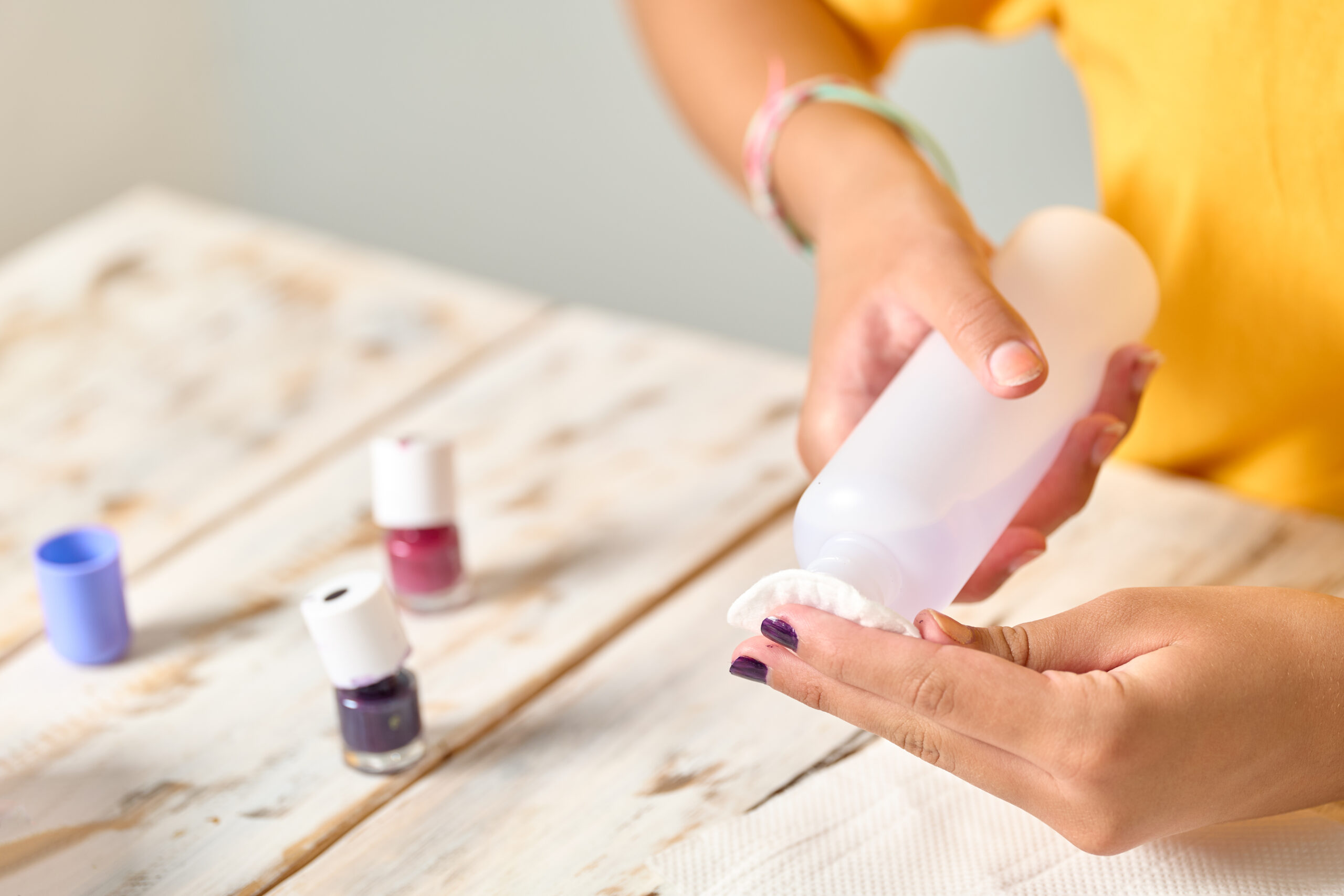
Acetone is an organic chemical compound that perfectly dissolves hybrid polishes, classic polishes, gels, and acrylics. Its main advantage is effectiveness and speed it takes just a few minutes to remove even the most durable nail styling. It’s used both in beauty salons and at home.
How does acetone work?
- It dissolves the layer of hybrid polish, making it easy to remove from the nail plate.
- It helps remove gels and acrylics without the need for intense filing.
- It allows you to quickly prepare your nails for the next styling.
Does Acetone Damage Nails? Facts vs. Myths
There are many myths about acetone. The most common are:
- Acetone permanently damages the nail plate.
- It causes brittle and splitting hybrid nails.
- It dries out cuticles and causes irritation.
What do professionals say?
- Acetone, in reasonable amounts and with proper use, does NOT cause permanent damage to nails. The key is the technique of removing hybrids and proper aftercare.
- The greatest risk of damage occurs when hybrids are removed too often, soaked in acetone for too long, or scraped off mechanically from the plate.
- Acetone can indeed dry out the nail plate and cuticles, but these effects are reversible with regular care.
Most Common Causes of Problems After Using Acetone
- Soaking nails in acetone for too long – the standard time is 10-15 minutes; longer exposure can dry out the plate and cuticles.
- Not protecting the cuticles – unprotected cuticles are prone to dryness and irritation.
- Removing hybrids too frequently – nails don’t have time to regenerate.
- Scraping off polish mechanically – damages the natural nail plate more than acetone itself.
- Lack of post-treatment care – skipping conditioner, cream, or oil deepens dryness.
How to Properly Remove Hybrids with Acetone? Step by Step
1. Prepare the necessary accessories:
- Cosmetic acetone (preferably 100%)
- Lint-free pads
- Aluminum foil or special clips
- 180-grit nail file
- Wooden stick or cuticle pusher
- Cuticle oil, moisturizing cream
2. Gently file off the top coat
- This makes it easier for acetone to penetrate and shortens the removal time.
3. Soak a pad in acetone, apply to the nail, and wrap with foil
- You can use reusable clips instead of foil.
4. Wait 10-15 minutes
- Do not exceed this time to avoid over-drying your hybrid nails.
5. Gently remove dissolved polish with a stick
- Do not force or scrape! If the polish doesn’t come off, repeat the process for a few more minutes.
6. Wash your hands and apply conditioner and oil
- This is a crucial step in post-hybrid regeneration.
Nail Care After Hybrids with Acetone
1. Moisturizing and Nourishing
- Cuticle oil – use daily, preferably several times a day.
- Hand cream with urea, vitamins, and oils – regenerates skin and the nail plate.
- Nail serum with keratin, biotin, calcium – strengthens and rebuilds the plate.
2. Take breaks from hybrids
- Take a few days’ break between stylings to allow your nails to regenerate.
3. Proper diet
- Include foods rich in biotin, zinc, iron, silica, and B vitamins in your diet.
4. Avoid mechanical damage
- Don’t use your nails as tools, don’t pick at hybrids, don’t file the plate dry.
Recommended Products
- High-quality cosmetic acetone – pure, without unnecessary additives.
- Cuticle oils and nail serums – e.g., with argan oil, jojoba, vitamin E.
- Conditioners with keratin, biotin, calcium – strengthen hybrid nails after treatments.
- Hand creams with natural oils – moisturize and protect cuticles.
- Special hybrid removal clips – more convenient and eco-friendly than foil.
Most Common Mistakes When Removing Hybrids with Acetone
- Soaking nails in acetone for too long.
- Skipping the step of filing off the top coat.
- Scraping off polish mechanically.
- No post-treatment care.
- Using low-quality acetone or from an unknown source.
- No breaks between hybrid nail stylings.
Expert Recommendations
- Use acetone only when necessary – don’t remove hybrids “just in case.”
- Always protect cuticles with oil or cream before the procedure.
- Don’t rush – gentleness and patience are key to healthy hybrid nails.
- Maintain regular care – moisturize, nourish, take breaks from hybrids.
- Choose trusted products – both hybrid polishes and acetone should come from reputable brands.
When used wisely and combined with proper care, acetone doesn’t have to be the enemy of your hybrid nails. The key to healthy, beautiful nails is gentleness, regular regeneration, and choosing proven nail styling products. Take care of your hands, and hybrids will be your best calling card!
And you? What are your experiences with acetone in nail styling? Do you have your own proven ways to regenerate nails after hybrids? Share in the comments your advice may help other hybrid manicure lovers!